Tile Roof Repair in Bradenton, FL
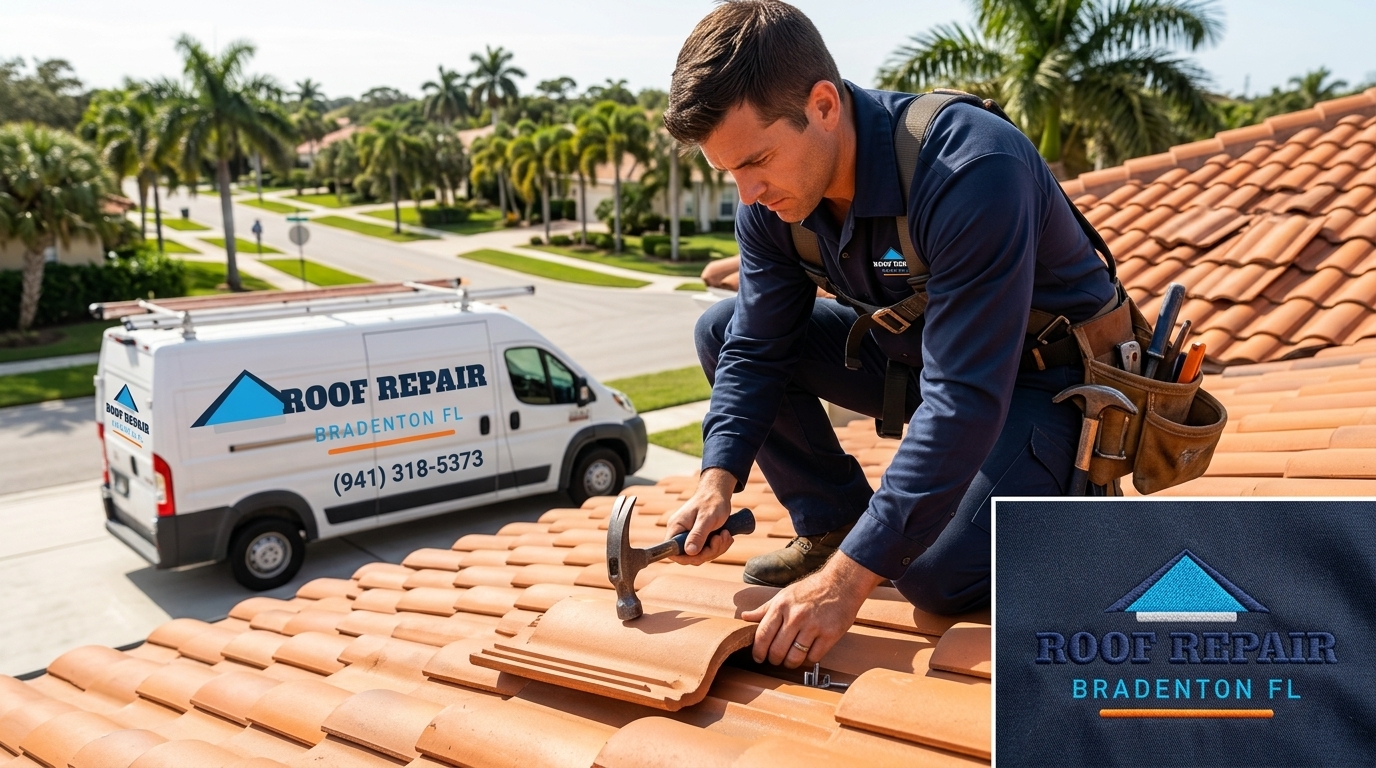
Tile roofs across Bradenton and Manatee County face a unique set of repair challenges. While the tiles themselves are durable, the underlayment beneath them deteriorates over time, fastener systems corrode, and individual tiles crack from impact or thermal cycling. We carefully lift tiles to access the actual failure point, complete the repair, and re-set each tile without causing additional breakage.
Common Tile Roof Problems in Bradenton
Tile roofs are built to last, but several components beneath and around the tiles require maintenance and repair over the roof's life.
Cracked or broken tiles from impact or thermal stress
Falling debris, foot traffic from previous service work, and the daily heating-cooling cycle in Bradenton can crack concrete and clay tiles. A cracked tile allows water to reach the underlayment directly, bypassing the tile's primary protective function.
Deteriorated underlayment beneath intact tiles
The most common tile roof repair in Florida addresses the waterproof membrane beneath the tiles — not the tiles themselves. After years of heat exposure, the underlayment degrades, cracks, and loses its ability to shed water that gets past the tile layer.
Displaced tiles from wind or animal activity
High winds can shift tiles out of position, and wildlife — raccoons, iguanas, and large birds — can displace tiles on Bradenton properties. Even a slightly shifted tile creates a gap where wind-driven rain can enter.
Corroded or failed fastener systems
Tile fastening systems — clips, nails, or wire ties — corrode over time in Florida's humid, salt-air environment. When fasteners fail, tiles become loose and vulnerable to wind displacement, even without direct storm impact.
Why Homeowners Should Avoid Walking on Tile
Tile roofs require specialized walking techniques to avoid causing additional damage. These safety considerations apply to all concrete and clay tile roofing.
Tiles crack under concentrated foot pressure
Stepping on the flat portion of a barrel or S-tile concentrates body weight on unsupported material. The tile breaks at the weakest point, creating a new damage point.
Adjacent tiles shift when you step on a neighbor
Interlocking tile systems transfer force to surrounding tiles. Walking incorrectly can displace or crack tiles several positions away from where you step.
Broken tiles from foot traffic are a common leak cause
A significant percentage of tile roof leaks we diagnose in Bradenton trace back to previous foot traffic damage — from cable installers, HVAC technicians, or homeowner inspections.
Professional crews know where and how to step safely
Experienced tile roof workers step on the reinforced overlap points and distribute weight to minimize breakage risk during inspection and repair.
Underlayment & Fastener Problems
The components beneath the tiles are often the actual source of leaks and repair needs. Understanding this distinction helps explain why tile roof repair sometimes requires more than replacing a broken tile.
Underlayment Degradation
The waterproof membrane beneath tiles absorbs heat from above and moisture from below. Over years, this membrane cracks, wrinkles, and loses its waterproofing integrity — even while the tiles above appear perfectly intact.
- Interior leaks with no visible tile damage
- Dried, brittle underlayment when tiles are lifted
- Water stains on decking visible from attic
Fastener Corrosion
Wire ties, metal clips, and nails used to secure tiles to the batten or deck system corrode in Florida's humid environment. As fasteners weaken, tiles become loose and susceptible to wind displacement — a common finding on older Bradenton tile roofs.
- Tiles that rattle or move in light wind
- Rusted fastener remnants on ground
- Tiles sitting unevenly on the surface
Flashing Integration Failures
Where tile meets walls, valleys, and penetrations, flashing details protect the transitions. On tile roofs, these flashing connections often deteriorate faster than the tiles themselves — particularly at chimney surrounds and roof-to-wall step flashing.
- Water stains near wall-roof junctions
- Separated or lifted counter flashing
- Visible gaps at transition points
Why Walking on Tile Roofs Without Training Causes Damage
One of the most counterintuitive aspects of tile roof ownership is that the roof itself can be damaged by the people who are trying to maintain it. Cable technicians, HVAC installers, and homeowners who access the roof without understanding tile-walking techniques frequently crack tiles — sometimes without realizing it.
The broken tiles may not leak immediately, but they create direct water paths to the underlayment below. In Bradenton's rainfall patterns, those cracks eventually admit enough water to produce interior stains, and the homeowner may not connect the leak to the service visit that happened months earlier.
This is why we recommend that all roof-level access on tile properties be performed by professionals experienced with tile roofing — and why we include a thorough tile condition assessment as part of every inspection.
Tile Roof Repair Process
Tile repair requires careful handling to avoid creating new damage while fixing existing problems.
Identify the Damage Area and Access Path
We determine the safest route across the tile surface to reach the damaged area, planning each step to minimize the risk of breaking additional tiles during access.
Carefully Lift Surrounding Tiles
Tiles around the damaged area are carefully lifted and set aside to expose the underlayment, fasteners, and deck beneath. Each tile's position is noted for accurate re-installation.
Inspect and Repair Underlayment and Decking
With the tiles removed, we inspect the condition of the underlayment and deck. Damaged underlayment is replaced, compromised decking is repaired, and any failed fasteners are addressed before tiles go back on.
Replace Tiles and Secure Fasteners
Replacement tiles are sourced to match the existing profile. All tiles — original and replacement — are re-set with proper overlap, alignment, and fastening. We verify that each tile sits correctly and is secured against wind uplift.
Tile Repair Options
Tile Roof Repair FAQ
Tiles are the first layer of defense, but the actual waterproofing comes from the underlayment beneath. If the underlayment has deteriorated — which is common on older tile roofs in Bradenton — water can pass through even when the tiles above appear intact. The leak originates beneath the tile surface.
Walking on a tile roof without training risks breaking tiles — both at the point of contact and adjacent tiles that shift under foot pressure. Broken tiles from foot traffic are one of the most common causes of tile roof leaks. Leave roof-level inspection to professionals with tile-walking experience.
We work to source matching tiles from manufacturers and salvage suppliers. Exact matches depend on the tile profile, color, and whether the original product is still in production. Weathering also changes tile color over time, so new tiles may appear different initially.
Concrete and clay tiles can last decades — the tiles themselves are durable. However, the underlayment beneath the tiles typically has a shorter lifespan and may need replacement while the tiles are still serviceable. Fastener systems and flashing also require maintenance over the roof's life.
Tile repair involves more labor-intensive processes — careful tile removal, underlayment access, and re-installation without breaking adjacent tiles. Material costs also differ. The total cost depends on the scope of work, tile type, and whether underlayment or decking repairs are also needed.
Cracked Tiles, Leaking Underlayment, or Displaced Tile Sections?
Whether you have visible tile damage or a leak with no obvious surface cause, a professional tile roof inspection identifies the source. We carefully access the affected area, evaluate the underlayment and decking condition, and provide a written repair plan.