Storm & Hurricane Damage Roof Repair in Bradenton
After a storm passes through Manatee County, roof damage is not always obvious from the ground. Wind-lifted shingles, hairline tile fractures, displaced flashing, and impact marks from airborne debris can all compromise your roof without creating visible surface openings. We provide systematic post-storm inspections, documented damage assessments, and targeted repair plans for Bradenton properties.
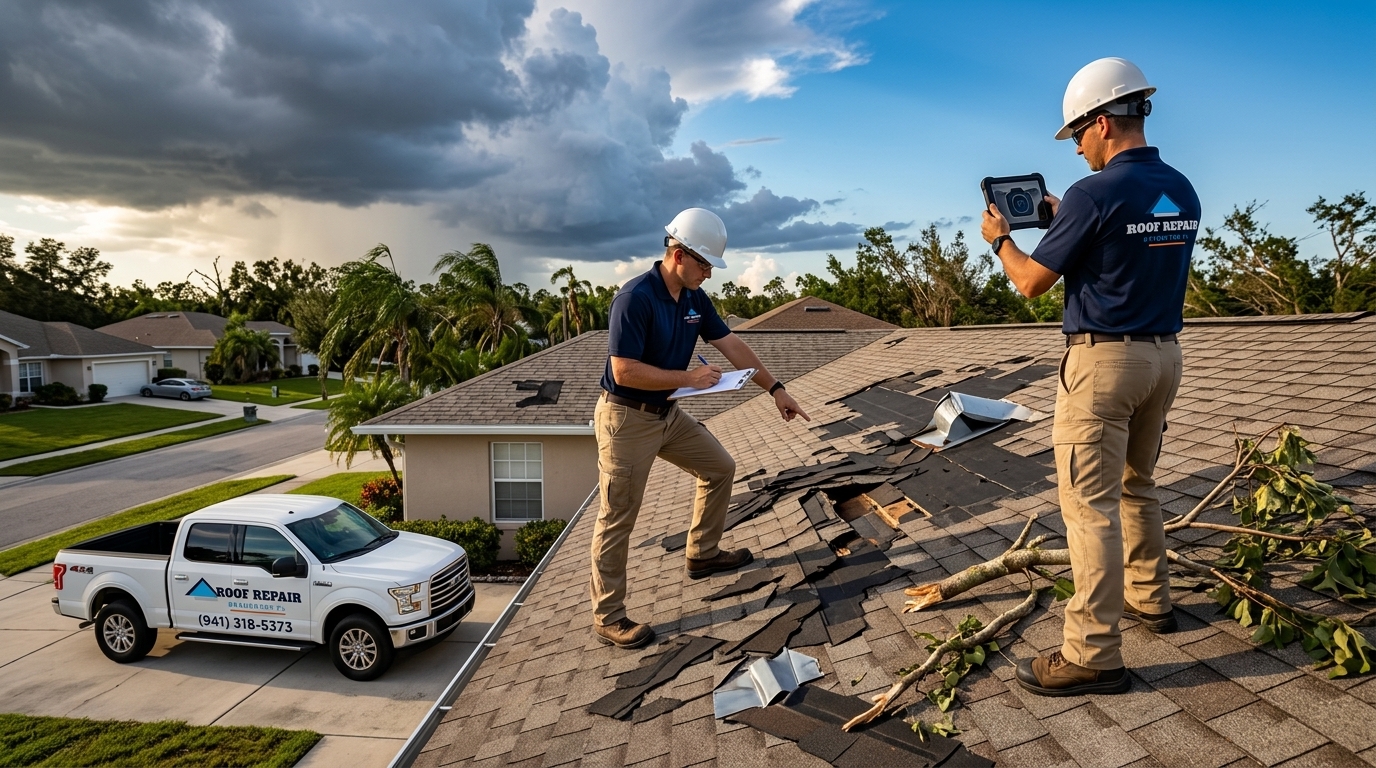
Types of Storm Damage That Affect Bradenton Roofs
Storms in Manatee County produce different types of roof damage depending on the event — wind, hail, debris impact, or driving rain. Recognizing the type of damage helps determine the appropriate inspection approach and repair scope.
Wind damage — lifted, creased, or missing roofing materials
High winds break the adhesive seal on shingles, lift tiles from their battens, and peel back metal flashing from transitions. Along the Gulf Coast, even non-hurricane tropical systems can generate gusts strong enough to damage roofing materials, particularly along edges, ridges, and hip lines.
Hail impact — bruised shingles, cracked tiles, dented metal
Hailstones compress the protective granule layer on asphalt shingles, crack concrete and clay tiles, and create dents in metal roof components. The damage may not cause an immediate leak but weakens materials and shortens their remaining service life significantly.
Debris impact — punctures and structural damage
Tree limbs, fence panels, patio furniture, and other airborne objects can puncture the roof surface and underlying decking. These impacts create direct water entry paths and may compromise the structural integrity of the affected area.
Wind-driven rain intrusion
Horizontal rain driven by high winds can force water beneath roofing materials, past flashing details, and through gaps that shed water normally under vertical rainfall. This type of intrusion often produces interior leaks without obvious surface damage to the roofing material itself.
Post-Storm Checklist for Bradenton Homeowners
After a storm, these ground-level and interior checks help you assess whether professional roof inspection is needed — without climbing onto the roof yourself.
Walk the perimeter and check for fallen debris
Look for shingles, tiles, metal pieces, or flashing on the ground around the building. Roofing material on the ground confirms surface damage above.
Check gutters and downspouts for granule accumulation
Heavy granule loss after a storm — visible as sandy buildup in gutters — indicates shingle surface damage that may not be visible from the ground.
Inspect interior ceilings for new water stains
Fresh staining on ceilings — especially on upper floors — after a storm event is a strong indicator that the roofing system was breached during the weather.
Photograph all visible damage from ground level
Document what you can see from the ground — missing materials, debris on the roof, gutter damage, and any interior water stains. This supports both the repair process and insurance claims.
Check metal components for visible dents or displacement
Gutters, vents, ridge caps, and flashing visible from the ground may show signs of hail impact or wind displacement that indicate roof-level damage.
Roof Areas Most Vulnerable to Storms
Certain areas of the roof are more exposed to storm forces than others. Understanding these vulnerability points helps explain why professional roof-level inspection is necessary after significant weather events.
Ridge Lines and Hip Caps
The highest points of the roof receive the strongest wind forces. Ridge caps and hip caps are frequently the first components to lift, crack, or separate during high-wind events.
- Cap shingles or tiles displaced
- Ridge vent pulled away from substrate
- Sealant failure at cap overlaps
Roof Edges and Eaves
Wind forces accelerate along roof edges, creating uplift pressure on the perimeter rows of shingles or tiles. Drip edge and starter strips along eaves are particularly susceptible to wind damage.
- Lifted or peeled-back edge shingles
- Displaced drip edge metal
- Exposed starter strip or underlayment
Flashing at Wall Transitions
Step flashing and counter flashing at roof-to-wall junctions are vulnerable to both wind uplift and debris impact. When these details fail, water enters the wall cavity — producing damage that may not be visible for weeks.
- Step flashing pulled away from wall
- Sealant broken at counter flashing
- Gaps between roofing and wall surface
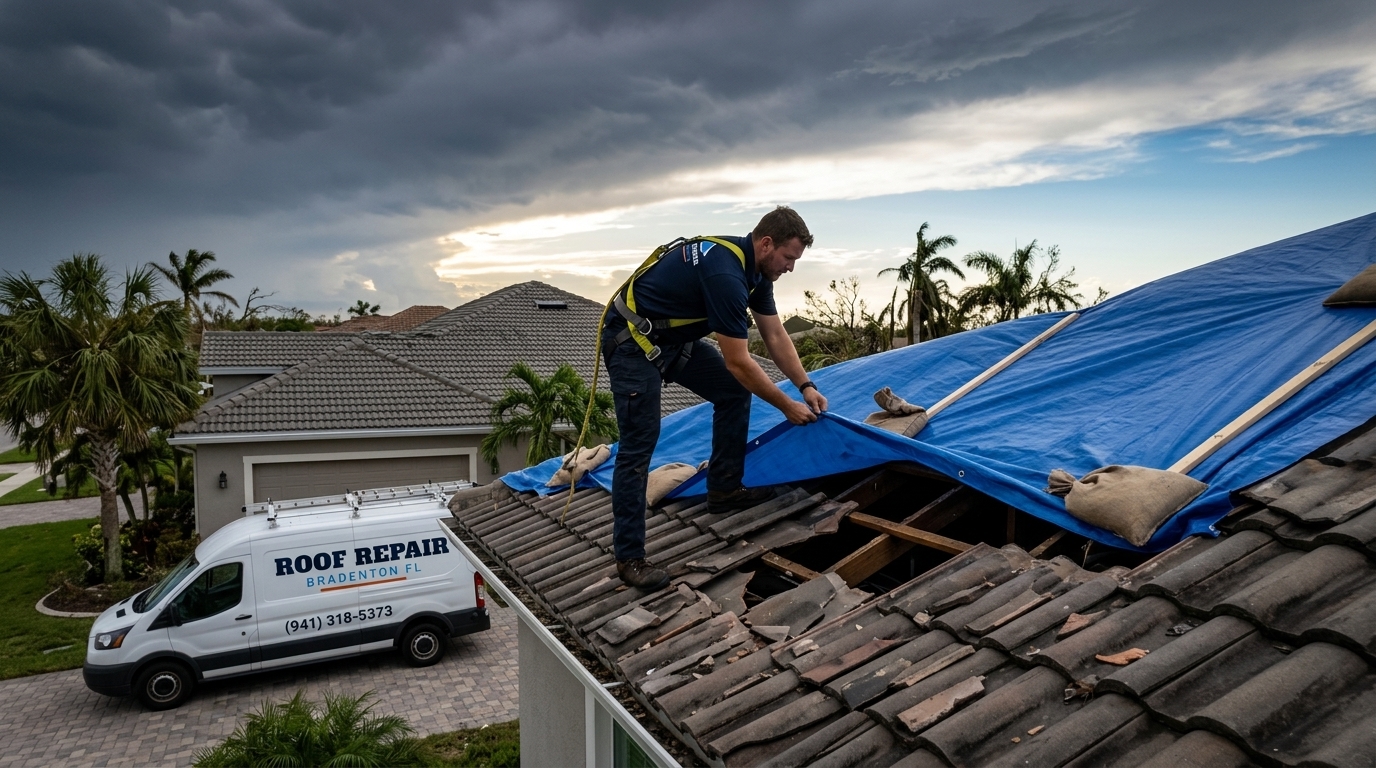
Why Storm Damage Often Goes Undetected from the Ground
After a storm, many homeowners walk around their property, see no missing shingles or visible holes, and conclude the roof is fine. In our experience across Bradenton and Manatee County, this visual ground-level check misses the majority of actionable storm damage.
Wind-creased shingles — where the adhesive strip has broken but the shingle remains in place — look normal from below but will lift and fail during the next wind event. Hail bruises that compress granules into the fiberglass mat are invisible from 20 feet away but accelerate aging. Hairline tile fractures allow water beneath the surface with no visible gap.
A professional roof-level inspection identifies damage that ground-level observation cannot detect. The documentation produced during this inspection also serves as the foundation for insurance claim submissions and repair planning.
Post-Storm Inspection & Repair Process
Every storm damage assessment follows a structured process that moves from documentation through evaluation to a detailed repair plan.
Full Roof-Level Inspection
We walk the entire roof surface, checking every slope, transition, penetration, and edge detail for signs of wind, hail, or impact damage. Each area of damage is photographed and marked for the assessment report.
Document All Damage with Photos
Every identified damage point is photographed from multiple angles with detailed notes about the type and extent. This documentation supports both the repair scope and any insurance claim filing.
Evaluate Repair vs. Replacement
Based on the damage extent, roof age, and material condition, we determine whether targeted repairs can restore the roof or whether the storm damage — combined with pre-existing wear — makes replacement the more practical and cost-effective path.
Provide Written Repair Plan and Estimate
You receive a detailed written scope of work outlining exactly what needs to be repaired, the materials required, and the estimated cost. This document gives you the information needed to make a decision and supports insurance claim submissions.
Storm Repair Options Based on Damage Extent
Storm Damage Repair FAQ
As soon as conditions are safe, ideally within the first few days. Early inspection helps document damage while evidence is fresh — before secondary weathering obscures the original storm effects. This is particularly important if you plan to file an insurance claim.
Yes. Many forms of storm damage — bruised shingles from hail, lifted nail seals from wind, hairline cracks in tile — are not visible from ground level. A professional roof-level inspection is the only reliable way to identify the full extent of damage.
The answer depends on the age of the roof, the percentage of area affected, the condition of the underlayment and decking, and the type of damage. An on-site inspection determines whether targeted repairs can restore the roof or whether the damage is widespread enough that replacement is the more practical path.
Coverage varies by policy. Most policies cover sudden storm damage from wind, hail, or falling debris — but exclusions and deductibles apply. Document damage with photos and video, report promptly to your insurer, and request a written damage assessment from a roofing professional to support your claim.
Wind damage typically manifests as lifted, creased, or missing shingles and tiles — the force tears materials away from the deck. Hail damage creates impact marks: dents in metal components, bruises or fractures in shingles, and cracks in tile. Both can compromise the roof's ability to shed water, but the repair approach differs.
Recent Storm Pass Through Bradenton? Schedule a Roof Inspection
If a storm recently affected your area — even if you do not see obvious damage from the ground — a professional roof inspection identifies hidden vulnerabilities before they develop into active leaks. We document every finding, provide a written repair plan, and help you understand your options.