Flat Roof Repair in Bradenton, FL
Flat and low-slope roofs on commercial buildings, lanais, carports, and residential additions across Bradenton face specific challenges that sloped roofs do not — ponding water, membrane degradation from direct UV exposure, and drainage system failures. We identify the failure point in your flat roof system and complete targeted repairs that restore waterproof protection.
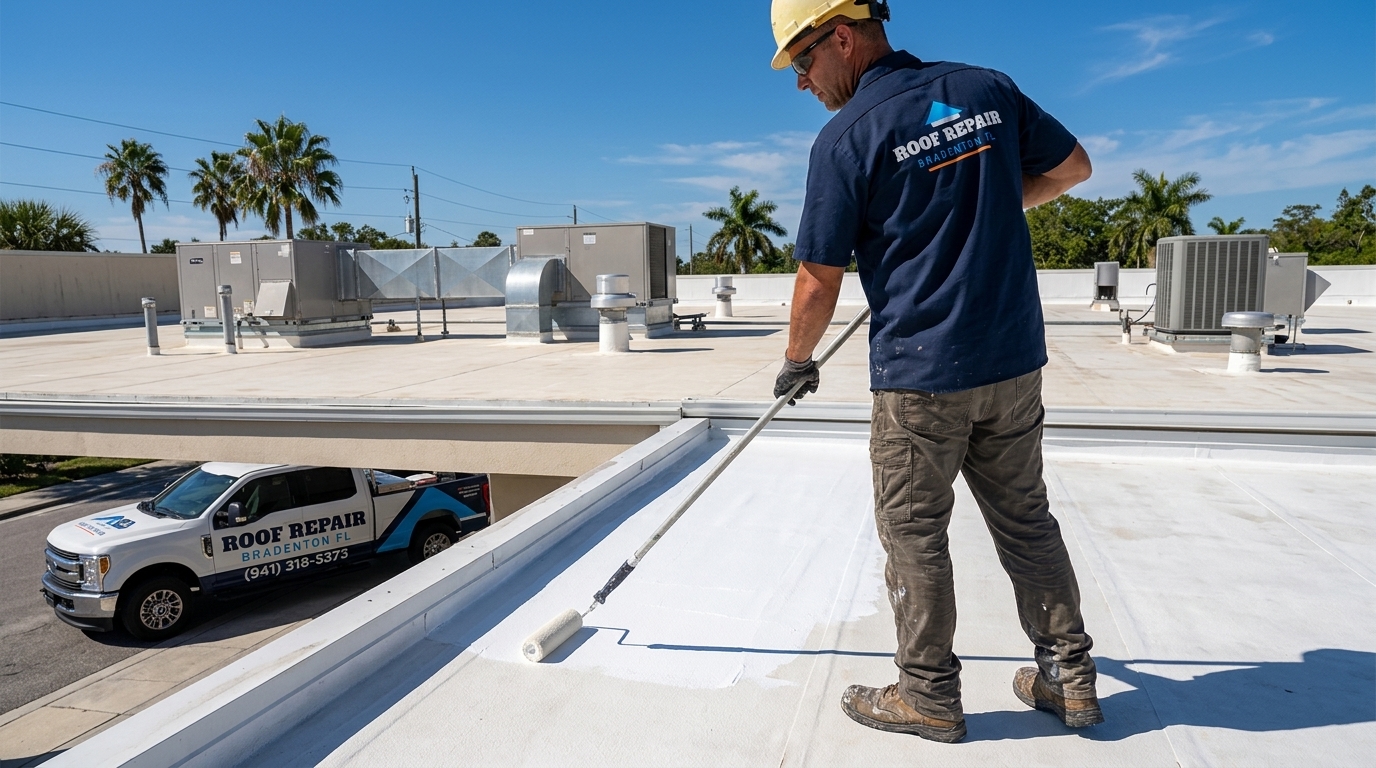
Common Flat Roof Problems in Bradenton
Flat roofs face specific challenges in Florida's climate. These are the conditions we most frequently diagnose and repair on Bradenton properties.
Ponding water that persists after rain
Water that remains on the membrane surface more than 48 hours after rainfall accelerates UV and chemical deterioration of the membrane material, adds structural load to the deck, and increases the risk of leaks at seams and penetrations within the ponding area.
Membrane blisters and bubbles
Trapped moisture between membrane layers or between the membrane and substrate expands under Bradenton's intense heat, creating raised blisters. These blisters weaken the membrane and can rupture during foot traffic or under thermal stress, creating direct leak paths.
Seam separations and open laps
Heat-welded and adhesive seams on TPO, EPDM, and modified bitumen membranes can fail over time due to UV degradation, thermal cycling, and material shrinkage. Open seams are among the most common flat roof leak sources we find in Manatee County.
Punctures from foot traffic or dropped equipment
Flat roofs are often accessed for HVAC service, antenna installation, or maintenance. Each access event creates a risk of puncturing the membrane with tools, equipment, or concentrated foot pressure — particularly on aged, brittle membranes.
Flat Roof Conditions to Monitor Regularly
Check drains and scuppers for debris
Clogged drainage is the primary cause of ponding water. Leaves, granules, and debris accumulate at drains and restrict water flow off the roof surface.
Look for visible membrane damage after storms
Inspect the roof surface for torn, lifted, or displaced membrane sections — especially around edges and penetrations where wind forces are strongest.
Note any interior water stains below the flat section
Ceiling stains in rooms directly below flat roof areas strongly suggest membrane or flashing failure above that area.
Monitor HVAC equipment pads and curbs
Equipment mounted on flat roofs sits on curbs or platforms that penetrate the membrane. The flashing around these curbs is a common failure point.
Membrane & Drainage Problems
Edge Detail Failures
The perimeter of a flat roof is where the membrane terminates — at parapet walls, drip edges, or coping. These termination details are exposed to significant wind uplift and thermal movement, making them among the first points to fail.
- Lifted or separated edge flashing
- Visible membrane pullback from parapet
- Water stains on exterior walls below edge
Interior Drain Blockages
Flat roofs with interior drains rely on clear drain bowls, strainers, and leader pipes to move water off the surface. When debris blocks these components, water ponds on the membrane surface and accelerates deterioration in the ponding zone.
- Water pooling around drain locations
- Slow drainage during moderate rain
- Debris rings visible around drain
Penetration Flashing Failures
Every pipe, conduit, and equipment curb that passes through the flat roof membrane creates a potential leak point. The seals and flashings around penetrations degrade under UV exposure and thermal cycling, eventually allowing water entry.
- Cracked sealant around pipe penetrations
- Lifted membrane at curb flashings
- Water stains below equipment locations
Why Ponding Water Accelerates Flat Roof Failure
Standing water on a flat roof does more than just sit there. It acts as a magnifying lens for UV radiation, concentrating solar energy on the membrane beneath. It adds weight that the structural system must support. And it keeps the membrane surface constantly wet, preventing the drying cycles that slow chemical degradation.
In Bradenton, where afternoon thunderstorms can dump significant rainfall in short periods, a drainage system that cannot clear the roof surface quickly creates conditions where ponding becomes a recurring problem. Each ponding cycle weakens the membrane in that area, and the failure eventually manifests as a leak directly through the ponded zone.
Addressing the drainage issue — whether it involves clearing blocked drains, adding crickets to redirect flow, or adjusting scupper elevations — is an essential part of any effective flat roof repair in this climate.
Flat Roof Diagnostic & Repair Process
Walk the Entire Membrane Surface
We inspect the full membrane surface for blisters, punctures, open seams, and areas of deterioration. Every drain, scupper, penetration, and edge detail is checked for proper function and seal integrity.
Evaluate Drainage and Ponding Patterns
We identify low spots, blocked drains, and areas where ponding occurs after rain. Understanding the drainage pattern helps determine whether the leak is a membrane issue, a drainage issue, or both.
Perform Targeted Membrane Repair
Based on the membrane type (TPO, modified bitumen, EPDM, or built-up), we apply the appropriate repair technique — heat welding, adhesive patching, or liquid membrane application — to seal the identified failure points.
Address Contributing Drainage Issues
If ponding or drainage problems contributed to the leak, we address those conditions as part of the repair scope. This may involve clearing drains, adjusting scupper heights, or recommending slope modifications to prevent future ponding.
Flat Roof Repair Options
Flat Roof Repair FAQ
Ponding water results from inadequate drainage, structural deflection, clogged drains or scuppers, or low spots that developed over time. While flat roofs are designed to handle some temporary water accumulation, water that remains for more than 48 hours after rain indicates a drainage or slope issue that should be evaluated.
Membrane lifespan depends on the material type, installation quality, UV exposure, and maintenance history. Florida's intense sun and heat accelerate membrane degradation compared to northern climates. Regular inspection helps identify deterioration before it becomes an active leak.
Yes, in many cases. If the membrane is generally in good condition and the leak originates from a specific point — a seam separation, puncture, or flashing failure — a localized repair can resolve the issue. However, if the membrane shows widespread deterioration, patching one area may lead to failures appearing nearby.
Blisters form when moisture trapped between membrane layers or between the membrane and substrate expands under heat. The trapped moisture vaporizes, creating a raised bubble. Small blisters may not leak immediately, but they weaken the membrane and can eventually rupture.
Standing water alone is not typically an emergency, but it accelerates membrane deterioration, adds structural load, and increases the risk of leaks at seams and penetrations. If ponding occurs regularly and does not drain within 48 hours, professional evaluation of the drainage system is recommended.
Ponding Water, Membrane Blisters, or Active Leaks on Your Flat Roof?
Flat roof problems tend to worsen with each rainfall cycle. A professional inspection identifies the failure points, evaluates drainage, and provides a clear written repair plan. Contact us to schedule your flat roof assessment.