Vent & Pipe Boot Repair in Bradenton, FL
Every plumbing vent, exhaust pipe, and conduit that passes through your roof creates a penetration point sealed by a rubber or neoprene boot. In Bradenton's intense UV and heat, these rubber components degrade faster than the surrounding roofing material — cracking, splitting, and pulling away from the pipe. We replace failed pipe boots with durable alternatives and restore a weatherproof seal at every roof penetration.
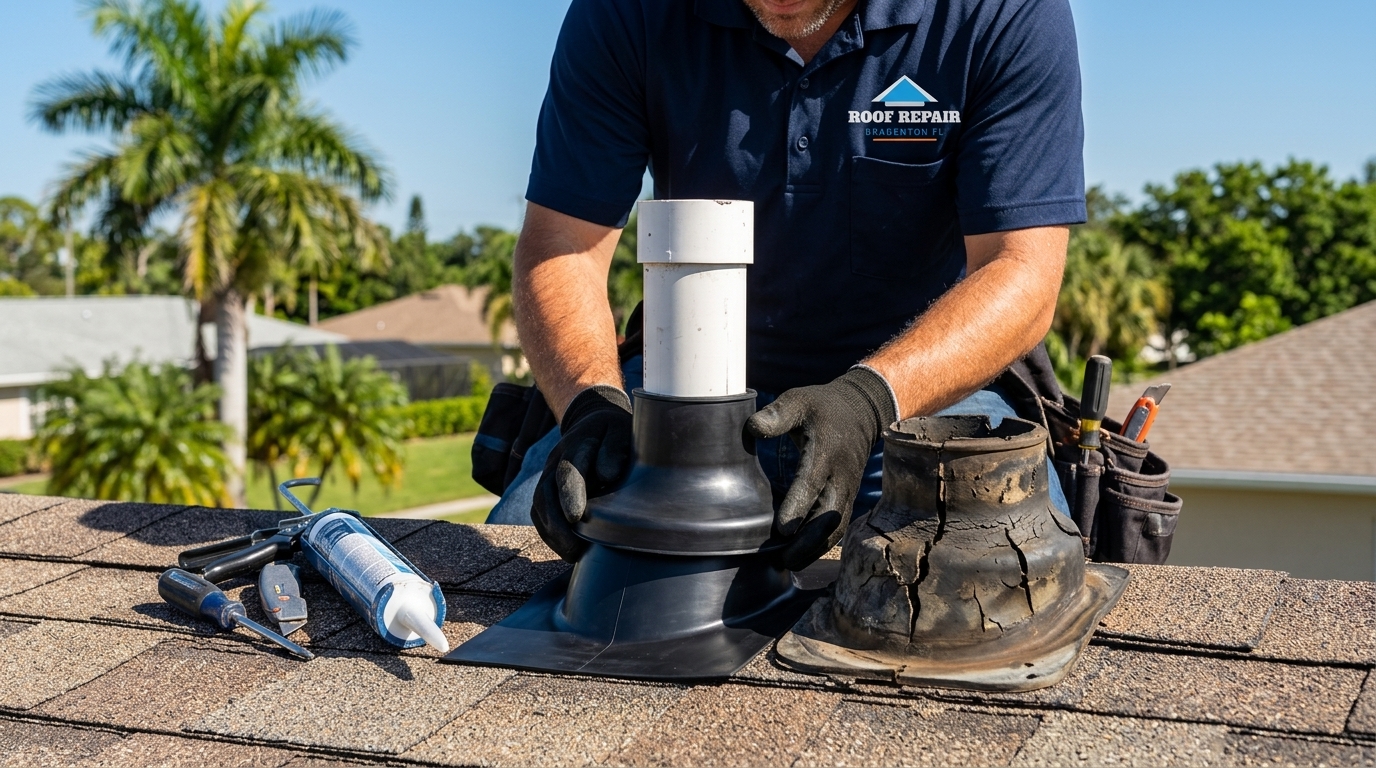
Pipe Boot & Vent Problems on Bradenton Roofs
Pipe boots are among the first components to fail on Bradenton roofs. Here is what we see most frequently during inspections.
Cracked and split rubber boot collars
UV radiation dries out the rubber compound, causing it to crack and split around the pipe. Once cracked, the boot no longer forms a watertight seal against the pipe surface, and every rainfall introduces water directly around the penetration point.
Rubber pulled away from pipe surface
As rubber shrinks and loses elasticity, the collar that once gripped tightly around the pipe loosens and pulls away. The gap between the boot and pipe creates a direct channel for rainwater to follow the pipe down through the roof deck.
Deteriorated base flange around the boot
The metal or rubber base that sits flat against the roof surface can also deteriorate — rusting through on metal bases or cracking on rubber flanges. When the base fails, water enters beneath the boot itself, bypassing the collar seal entirely.
Failed sealant at pipe boot edges
Previous repair attempts often involve applying caulk or sealant over cracked boots. This sealant degrades quickly under Florida sun, and the underlying boot continues to deteriorate beneath the patch — creating a false sense of security.
Why Pipe Boots Fail Before the Rest of Your Roof
Rubber degrades faster than roofing materials under UV
The neoprene and EPDM rubber used in standard pipe boots has a shorter UV resistance rating than asphalt shingles, concrete tiles, or metal roofing. Under Bradenton's intense sun, the rubber reaches its degradation point years before the surrounding roof.
Thermal cycling cracks inflexible rubber
As rubber ages, it loses flexibility. The daily temperature swings on a Bradenton roof — from cool overnight air to scorching afternoon surfaces — cause the rigid rubber to crack rather than flex with the movement.
Pipe boots are installed at the highest vulnerability points
Penetrations through the roof deck are inherently the weakest points in any roofing system. The seal between a round pipe and a flat roof surface relies entirely on the boot material maintaining its grip and shape.
Pipe Boot Replacement Options
Standard Rubber Boot
The most common replacement option. A new rubber boot restores the seal at the pipe penetration. This is a cost-effective solution, though the new rubber boot will eventually face the same UV degradation in Florida's climate.
- Economical replacement option
- Standard for most pipe sizes
- Expected to need replacement again over time
Metal Collar System
A metal collar with a rubber gasket at the pipe contact point provides significantly longer service life. The metal base and collar resist UV degradation, while the smaller rubber gasket — partially shielded by the metal — lasts longer than a fully exposed rubber boot.
- Extended service life in Florida sun
- Metal components resist UV damage
- Rubber gasket shielded from direct exposure
Retrofit Over-Collar
For situations where removing the existing boot is impractical, retrofit collars slide over the pipe above the existing boot, creating a secondary seal. This can extend the functional life of an aging boot, but is best used as a bridge to full replacement.
- Installs without removing existing boot
- Bridge solution for temporary extension
- May not address base flange deterioration
The Hidden Cost of Ignoring Failed Pipe Boots
Pipe boot leaks are deceptive. The water volume entering through a cracked boot during a single storm may seem small — a slow drip down the pipe into the wall or ceiling cavity. But each rainfall event adds moisture to areas that cannot dry easily.
Over weeks and months, this repeated moisture introduction saturates insulation, promotes mold growth in the wall cavity, stains ceilings, and can eventually damage the roof deck around the penetration. By the time the homeowner notices a visible stain on an interior ceiling, the damage has often spread well beyond the drip point.
Because pipe boot replacement is one of the most straightforward and cost-effective roof repairs, addressing failed boots promptly prevents disproportionate secondary damage.
Pipe Boot Replacement Process
Inspect All Roof Penetrations
We check every pipe boot, vent cap, and conduit penetration on the roof — not just the one showing obvious failure. Because boots degrade at similar rates, multiple boots often need attention during the same service visit.
Remove Failed Boot and Inspect Substrate
The old boot is carefully removed, and we inspect the surrounding roofing material, underlayment, and deck around the penetration for signs of water damage that occurred while the boot was leaking.
Install New Boot or Metal Collar System
The replacement component is installed with proper overlap onto the surrounding roofing material, sealed at the base, and verified for a tight collar-to-pipe fit. Shingle courses are properly layered around the new boot.
Check Collar Seal and Integration
We verify that the collar grips the pipe firmly, the base sits flat against the roof surface, and the surrounding shingles or roofing material properly overlap the boot's base flange.
Vent & Pipe Boot FAQ
A pipe boot is a rubber or neoprene collar that seals around plumbing vent pipes where they pass through the roof surface. The rubber material degrades under UV exposure and thermal cycling, eventually cracking, splitting, or pulling away from the pipe — creating a direct path for water to enter the roof system.
Interior water stains near bathrooms or kitchens — particularly on upper floor ceilings — often trace back to failed pipe boots directly above. From the ground, you may see the rubber collar looking cracked, split, or lifted away from the pipe. However, many pipe boot failures are only visible during a roof-level inspection.
Once the rubber material has cracked or split, replacement is the most reliable repair. The degraded rubber cannot be effectively re-sealed because the material itself has lost its flexibility and weatherproofing properties. We install new boots or metal collar systems designed for longer service life.
Standard rubber pipe boots in Florida's UV-intensive climate typically show significant degradation well before the surrounding roofing materials. The combination of intense sun, heat, and thermal cycling accelerates rubber deterioration compared to northern climates.
Yes. Metal collar systems and hybrid metal-rubber boots offer significantly longer service life than standard all-rubber boots. These alternatives use aluminum or galvanized metal components that resist UV degradation, with rubber gaskets only at the pipe contact point where they are partially shielded from direct sun.
Cracked Pipe Boots or Leaking Vent Seals?
Failed pipe boots are one of the most common — and most preventable — causes of roof leaks in Bradenton. A professional inspection checks every penetration point on your roof and identifies boots that need replacement before they cause interior water damage.