Roof Deck & Water Damage Repair in Bradenton
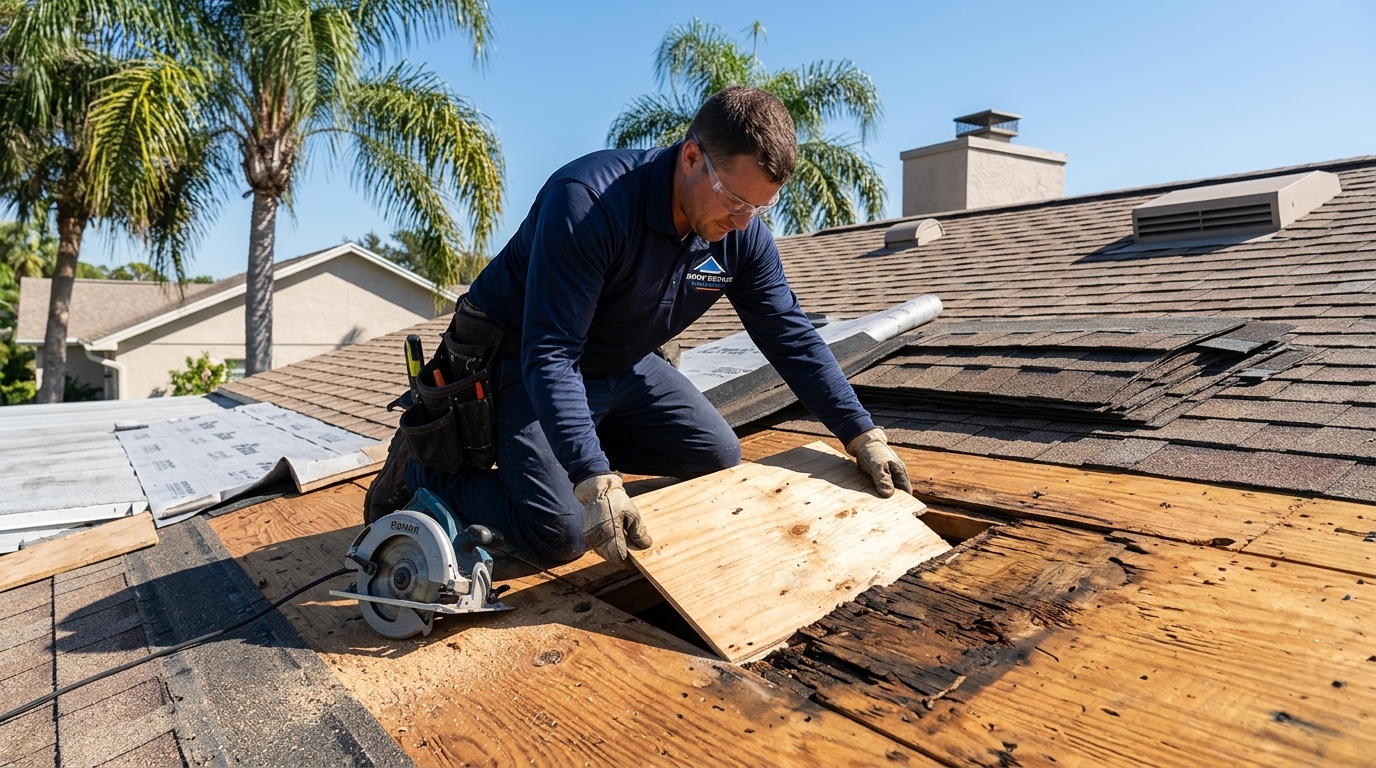
When a roof leak goes undetected or unrepaired, the plywood or OSB decking beneath the roofing material absorbs water, swells, delaminates, and eventually rots. This structural substrate is the foundation that supports everything above it — the underlayment, shingles, tiles, or membrane. We remove compromised decking, evaluate the underlying structure, and install new substrate before restoring the roofing system above.
Signs Your Roof Deck May Be Compromised
Deck damage often develops beneath the surface and becomes apparent through indirect signs. These indicators suggest that the structural substrate may need evaluation.
Soft or spongy areas on the roof surface
When walking on the roof produces a soft, springy sensation — as if the surface gives under foot pressure — the plywood beneath has likely absorbed moisture and lost its structural rigidity. This is one of the most definitive indicators of deck failure.
Visible sagging in the roofline or interior ceiling
A dip or sag visible in the roofline from the exterior — or sagging ceiling sections inside — indicates that decking panels have weakened to the point where they can no longer support the weight of the roofing materials above.
Dark staining on attic-side decking
When viewed from inside the attic, water-damaged decking appears as dark stains, discoloration, or visible mold growth on the underside of the plywood sheets. This discoloration marks where water has been repeatedly wetting the wood.
Persistent leaks despite surface repairs
If a roof leak returns after surface-level repairs — new shingles, re-sealed flashing, replaced pipe boot — the underlying deck may have deteriorated to the point where it no longer provides a sound substrate for the roofing system above it.
What to Look for in Your Attic Space
If you have safe access to your attic, these observations can help identify potential deck issues before they become visible from the interior living space.
Daylight visible through the deck surface
Light entering through the decking means the roof surface above has openings. The decking around these openings has likely been exposed to water and may show early signs of deterioration.
Musty or moldy smell in the attic
A persistent musty odor in the attic space — especially during humid periods — suggests moisture is present in the wood substrate. Mold colonizes moist wood surfaces and indicates ongoing or recent water exposure.
Water stains or discoloration on rafters
Water that enters through the deck surface runs along rafters and trusses before dripping to the attic floor. Dark staining on the sides of rafters traces the water path from the entry point.
Delaminating or swollen plywood sheets
OSB and plywood that have absorbed significant moisture swell at the edges and delaminate — the layers separate and the panel loses structural cohesion. This damage is irreversible and requires panel replacement.
How Roof Deck Damage Develops
Deck damage is always secondary — it results from a failure in the roofing system above. Understanding the primary causes helps explain why addressing the original leak source is essential during deck repair.
Chronic Slow Leaks
Small leaks from failed pipe boots, deteriorated flashing, or cracked tile underlayment introduce small amounts of water with each rainfall. Over months, this repeated wetting saturates the wood fiber and initiates the rot cycle — often without producing visible interior stains until the damage is advanced.
- Localized soft spots beneath penetrations
- Staining visible only from attic side
- Damage concentrated at specific entry points
Storm Damage Left Unrepaired
When storm damage is not promptly addressed — missing shingles, displaced tiles, or lifted flashing — each subsequent rain event introduces water to the exposed deck. In Bradenton's summer storm season, multiple rain events per week can saturate unprotected decking rapidly.
- Damage pattern following storm breach location
- Rapid deterioration during rainy season
- Often combined with underlayment failure
Condensation and Ventilation Deficiency
Inadequate attic ventilation traps moisture-laden air against the underside of the deck. In Bradenton's humid climate, this condensation cycle can moisten the decking without any roof leak being present — producing mold growth and gradual wood deterioration from the attic side.
- Widespread mold on deck underside
- No obvious roof leak above
- Poor attic airflow or blocked vents
Why Roof Deck Repair Cannot Be Skipped
Installing new roofing material over compromised decking is like building on a damaged foundation. The nails or screws that hold shingles and underlayment cannot achieve proper pull-out resistance in rotted wood. Tiles cannot sit flat on warped, swollen panels. And the continued moisture in the wood promotes ongoing mold growth and wood decay beneath the new surface materials.
We have inspected roofs in Bradenton where a previous contractor replaced shingles or re-sealed flashing without checking the deck beneath — and the new roof repair failed within a season because the substrate could not support it. Proper deck evaluation is an essential step before any surface restoration.
Deck Replacement Process
Remove Roofing Material to Expose the Deck
The roofing material, underlayment, and any deteriorated components above the damaged area are carefully removed to expose the deck surface. The full extent of the damage is only visible once the surface materials are lifted.
Identify and Mark the Damaged Area
We probe the deck to determine the boundaries of the compromised wood — identifying exactly where sound plywood ends and damaged material begins. This defines the cut lines for removal.
Remove Damaged Decking and Inspect Rafters
Rotted panels are cut out and removed. With the decking open, we inspect the rafters and trusses beneath for signs of water damage, wood rot, or structural compromise that may need attention before new decking is installed.
Install New Decking, Underlayment, and Surface Material
New plywood or OSB panels — matched to the existing deck thickness and grade — are fastened securely to the rafters. New underlayment is installed over the replacement decking, and the roofing surface material is restored to complete the weatherproof system from substrate to surface.
Deck Repair Options
Deck & Water Damage FAQ
Signs include soft or spongy spots on the roof surface when walked on, visible sagging from inside the attic, dark staining on the underside of the plywood, a musty smell in the attic space, and interior ceiling damage that persists after surface roof repairs. Many deck problems are only confirmed during a professional inspection.
Rotted decking must be cut out and replaced — there is no effective way to restore structural integrity to wood that has been compromised by moisture and decay. The replacement involves removing the damaged section, verifying that surrounding decking and rafters are sound, and installing new plywood or OSB to match the existing substrate.
The most common cause is prolonged water intrusion through failed roofing components — cracked pipe boots, deteriorated flashing, missing shingles, or failed tile underlayment. In Bradenton's humid climate, even small amounts of recurring moisture can saturate plywood and initiate wood rot within the deck substrate.
It varies significantly. Some leaks produce localized damage limited to a small area around the entry point. Others — particularly slow leaks that go undetected for extended periods — can affect multiple sheets of decking. The extent is determined during the repair when roofing materials are removed and the full damage is visible.
Coverage depends on the cause and your policy terms. Deck damage from a sudden storm event may be covered, while damage from long-term maintenance neglect or gradual deterioration may not be. Document the damage, report to your insurer, and obtain a professional damage assessment to support your claim.
Suspect Rotted Decking or Structural Water Damage?
Deck damage is the most structurally significant roof repair — and the one that causes the most problems when overlooked. A professional inspection evaluates the substrate condition, identifies the original leak source, and provides a complete repair plan that addresses both the cause and the consequence.