Emergency Roof Repair in Bradenton, FL
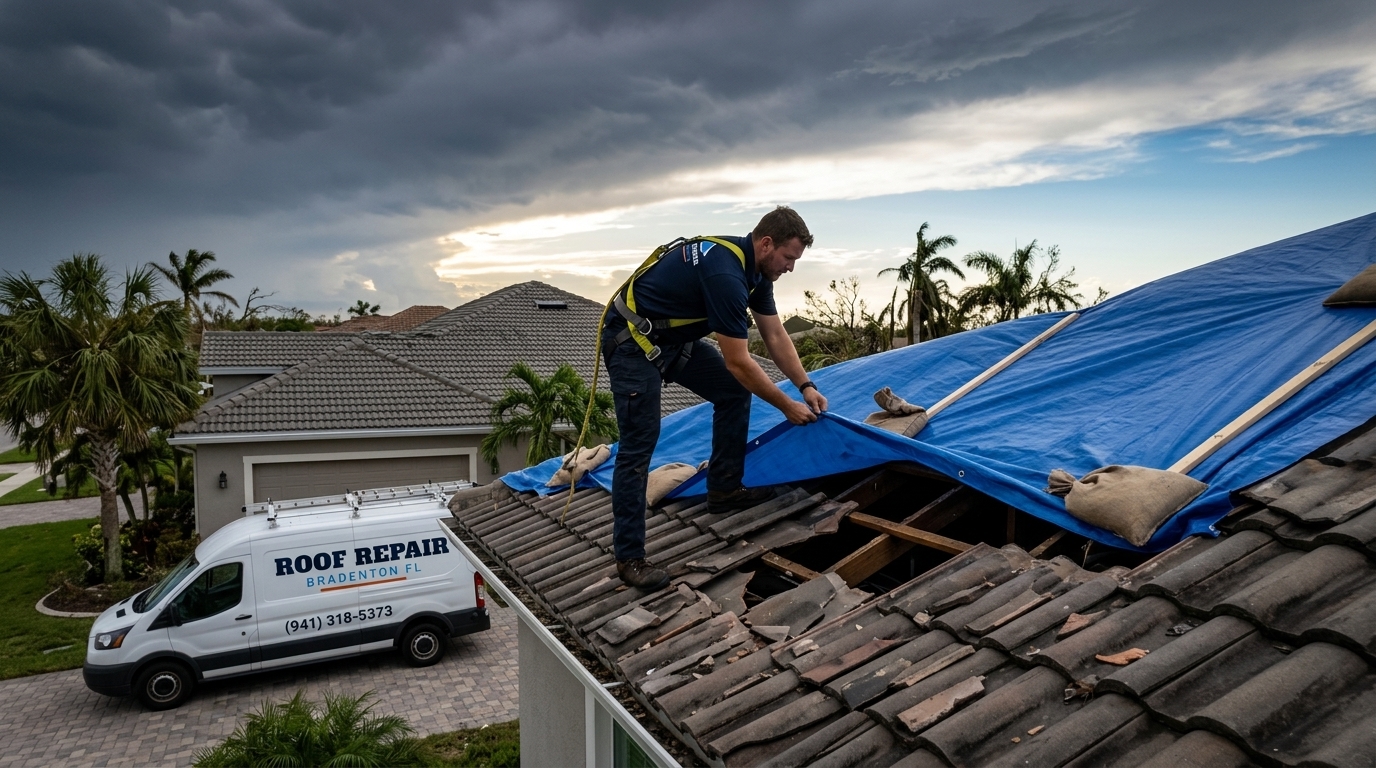
When a storm tears off roofing material, a tree limb punctures the deck, or an active leak threatens your interior — the priority is stopping water entry as quickly and safely as conditions allow. We provide emergency tarping, temporary waterproof protection, and a clear path to permanent repair for properties across Bradenton and Manatee County.
Conditions That Require Immediate Attention
Not every roof problem is an emergency, but certain situations demand prompt response to prevent escalating interior damage. These conditions justify contacting a roofing professional without delay.
Active water pouring into living spaces
When water is actively entering through the ceiling or walls during rainfall, the roofing system has a direct breach that requires immediate temporary protection. Place containers to catch water, move valuables, and document the damage while waiting for safe roof access.
Storm-created openings in the roof surface
High winds, fallen branches, or flying debris can tear away shingles, tiles, or entire sections of roofing material — leaving the deck and interior exposed. In Bradenton, where tropical storms and afternoon thunderstorms are common, these openings can lead to rapid interior damage if not covered.
Fallen tree limbs or large debris on the roof
Large branches resting on the roof may have punctured the surface material and decking, even if the damage is not visible from the ground. Removing debris safely and inspecting the impact area is critical before the next rainfall.
Sagging or structurally compromised roof sections
Visible sagging in the roofline or ceiling can indicate saturated decking, failed structural members, or accumulated water weight. This condition requires professional evaluation before anyone accesses the affected area.
What You Can Do While Waiting
While waiting for professional help, there are several safe actions you can take from inside to limit damage to your home and belongings.
Move furniture and electronics away from the affected area
Clear valuables from beneath active drips to prevent additional property damage while waiting for roof access.
Place containers to catch dripping water
Use buckets, bins, or large pots beneath active drip points. Place towels around the base to catch splatter and prevent floor damage.
Take photos and video of all visible damage
Document ceiling stains, active water entry, damaged areas, and any exterior damage visible from the ground. This documentation supports both the repair process and any insurance claim.
Do not attempt to climb onto a wet or damaged roof
Wet, storm-damaged, or structurally questionable roofs are extremely hazardous. Professional crews have the equipment and training to work safely under these conditions.
Contact your insurance provider if storm damage is suspected
Many policies require prompt notification of damage. Report the situation to your insurer while professional roof evaluation is being arranged.
How Emergency Roof Conditions Develop
Understanding the common causes of emergency roof situations helps you recognize when immediate action is necessary versus when a standard repair appointment is appropriate.
High-Wind Events
Tropical storms and strong thunderstorms along the Gulf Coast can generate sustained winds and gusts that lift shingles, displace tiles, and peel back flashing. Once the wind seal on shingles is broken, each subsequent storm compounds the exposure.
- Missing or creased shingles after storms
- Displaced ridge and hip caps
- Peeled-back metal flashing or edge details
Falling Debris and Impact Damage
Tree branches, airborne objects, and large hail can puncture roofing materials and the underlying decking. Impact damage often creates clean entry points that allow large volumes of water to reach the interior during the next rainfall.
- Visible punctures or cracks in surface materials
- Branches or debris resting on the roof
- Broken or shattered tiles from direct impact
Sudden Failure of Aging Components
Roofing materials that have been gradually deteriorating — cracked pipe boots, corroded flashing, aging membrane seams — can fail suddenly during heavy rain. What seemed like a minor maintenance issue can become an active leak without warning when Bradenton's summer storms arrive.
- Previously minor leak becomes rapid water entry
- Pipe boot or vent seal gives way completely
- Flat roof membrane opens at an existing blister
Why Timing Matters in Emergency Roof Situations
Every hour that water enters a building without temporary protection, the damage scope expands. Saturated drywall, wet insulation, damaged flooring, and moisture that reaches wall cavities all increase repair costs and recovery time.
In the Bradenton area, where afternoon storms can follow each other in rapid succession during summer months, unprotected roof openings can admit significant water within a single weather cycle. The difference between same-day temporary protection and a multi-day wait often determines whether the interior damage stays contained or becomes a larger restoration project.
Emergency tarping is not a permanent solution — it is a critical bridge between the damage event and a planned, properly executed permanent roof repair. The sooner the opening is covered, the more limited the secondary damage will be.
How Our Emergency Response Works
When you contact us with an emergency, we follow a structured process designed to stop water entry first, then plan the permanent repair.
Assess the Situation by Phone
We gather details about the damage — location, severity, active water entry, and any safety concerns. This information helps us prioritize and prepare the right materials and crew before arriving.
Arrive and Evaluate Safety Conditions
Before accessing the roof, we evaluate weather conditions, structural stability, and access safety. Emergency work only proceeds when conditions allow safe access for our crew.
Install Temporary Protection
We secure heavy-duty tarps over the damaged area, anchored to withstand wind and rain until permanent repairs can be scheduled. For smaller openings, we may apply temporary waterproof barriers directly over the breach point.
Document Damage and Plan Permanent Repair
Once the immediate threat is controlled, we photograph and document all visible damage. This documentation supports insurance claims and provides the foundation for a detailed permanent repair plan with a written estimate.
Emergency Protection Options
The scope of emergency work depends on the severity and extent of the damage. Here is what to expect at each level.
Emergency Roof Repair FAQ
A roofing emergency typically involves active water entry into the living space, a structural opening caused by fallen debris or storm damage, or any condition where the roof can no longer prevent water from reaching the interior. Missing sections of roofing material after a storm also qualify when rain is expected.
Response timing depends on weather conditions, safety access, and current demand. During active storms, we prioritize calls based on severity and schedule emergency visits as soon as conditions allow safe roof access.
Emergency tarping involves securing heavy-duty waterproof tarps over the damaged area to prevent additional water intrusion. The tarp is fastened to undamaged sections of the roof and anchored to resist wind uplift until permanent repairs can be completed.
Coverage depends on your policy terms, the cause of damage, and your insurer's assessment. Sudden storm damage may be covered under certain policies, but coverage is never guaranteed. Document the damage with photos and contact your insurer for specific claim guidance.
In some cases, yes. If the damage is localized and the surrounding roof is in good condition, what starts as an emergency repair can transition directly into a permanent fix. However, more extensive damage typically requires a separate scope of permanent repair work after the immediate threat is controlled.
Roof Damage That Cannot Wait? Contact Us Now
If your roof has an active breach, missing materials, or storm damage that is allowing water into your home — reach out to discuss emergency protection options. We will assess the situation, provide temporary waterproofing when conditions allow, and plan the permanent repair with a written estimate.